How to Build an Industrial Owner Prospect List
Define the assignment, find industrial properties that fit, and reach the owners behind them. A practical way to turn a researched list into a working pipeline.
A good industrial prospect list starts with a clear picture of the property you want. If you’re looking for outdoor storage, a warehouse search by itself won’t get you very far. If you represent an owner looking to sell, your criteria may be different again.
Define the assignment, find the properties that fit, and then work out who to contact. Unreal keeps those steps together so the list you research is the same one you use for outreach and follow-up. For other property types, see our guide to building a CRE prospect list by asset class.
Write Down What Makes a Property Worth Pursuing
Start with the market, intended use, and physical requirements. For an industrial acquisition, that might include lot size, building size, and the relationship between the two. For a more specialized search, the occupant’s business may matter as much as the building category.
Separate requirements from questions. You may be able to filter for lot size immediately, while another condition needs a call or further investigation.
This keeps your search useful. Too few criteria leave you with a long list of poor fits. Too many rigid criteria can hide properties that deserve a closer look.
Search the Map and Check the Shortlist
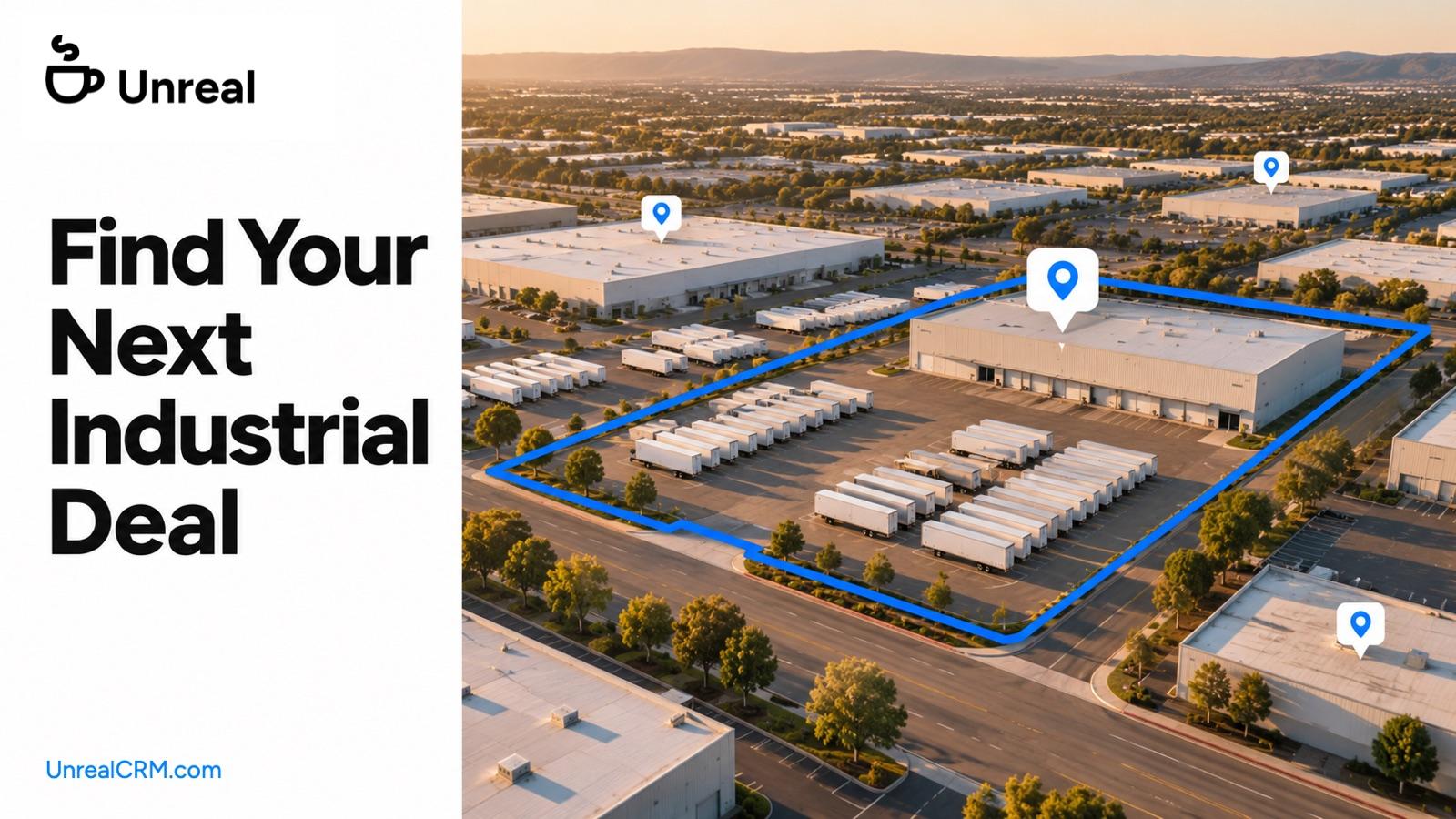
Unreal lets you filter properties by geography, asset type, and building characteristics. Use the map to review the results alongside the table. Our breakdown of the search filters that surface likely sellers is a useful starting point.
An address that looks ordinary in a spreadsheet may sit next to another relevant parcel. A cluster of buildings may lead you to one owner. These are details worth investigating before you spend time collecting contact information.
Keep a short explanation of why each property made the cut. If another person joins the project, they should be able to understand the list without repeating your research.
Consider the Owner’s Other Properties
The building is only part of the story. Look at what else the owner holds and how that portfolio has changed.
An owner who has held one property for years while acquiring different kinds of assets may be open to a conversation about it. Another may consider that same building central to their strategy. The portfolio gives you context; the owner gives you the answer.
Group properties that lead to the same person. You can then approach the relationship with a view of the portfolio, rather than making a separate cold call about every address.
How One Investor Narrowed the Search
An industrial outdoor storage investor working in Unreal started with more than a thousand properties and narrowed the pool to roughly a hundred of interest. The team’s research criteria considered lot size, assessment information, portfolio assembly, and proximity to infrastructure.
Then, they reached out via email and calling to all of the owners through Unreal. As responses came in, the team could see who had expressed interest, what had been discussed, and what owners said about pricing.
A shortlist tells you where to look. The conversations tell you which opportunities deserve more attention.
Get the Contact Information When You Need It
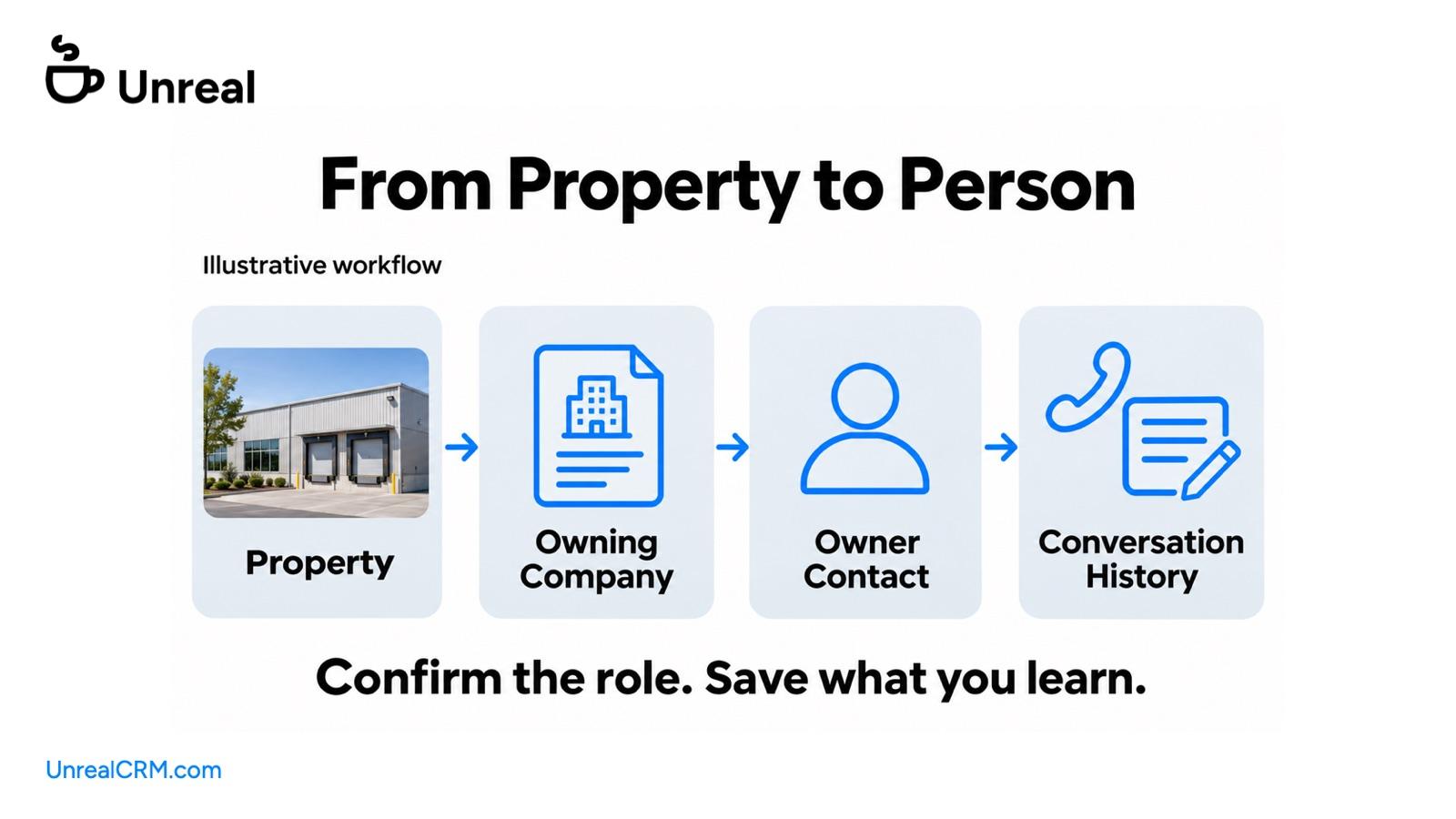
Once you’ve narrowed the properties, use Unreal to find the people behind the owning companies and their verified phone numbers and emails. Contact research runs when you request it, so you can move from a property to outreach without exporting the list to another service.
Coverage can vary by market and property type. If a result needs clarification, keep what you learn with the property and contact. Your next search should benefit from that work.
Leave Yourself a Useful Next Step
Suppose an owner says they may consider selling after a tenant decision later in the year. Save the reason and the timing, then set a reminder around that conversation.
“Call in September about the tenant decision” gives you something useful to act on. A bare “follow up” asks you to reconstruct the whole conversation.
Unreal links the calls, notes, contacts, and deal activity. Your team can see where the opportunity stands and pick it up with the history intact.
Start with one industrial assignment. Build the criteria, work the shortlist, and keep the answers. That is how a researched list becomes a pipeline you can return to.
Have an industrial assignment in mind? Book an Unreal walkthrough and we’ll build the shortlist with you on your market.
Keep reading
More on prospecting, owner data and outreach. Or see how Unreal compares to the tool you use today.