How to Find CRE Buyers without Buying Lead Lists
Build a CRE buyer list around your listing: owners of comparable properties, active investors, and businesses using similar space. No lead list needed.
You have a property to sell. You know the building, the asking price, and the kind of buyer who could make it work. Now you need to find those people.
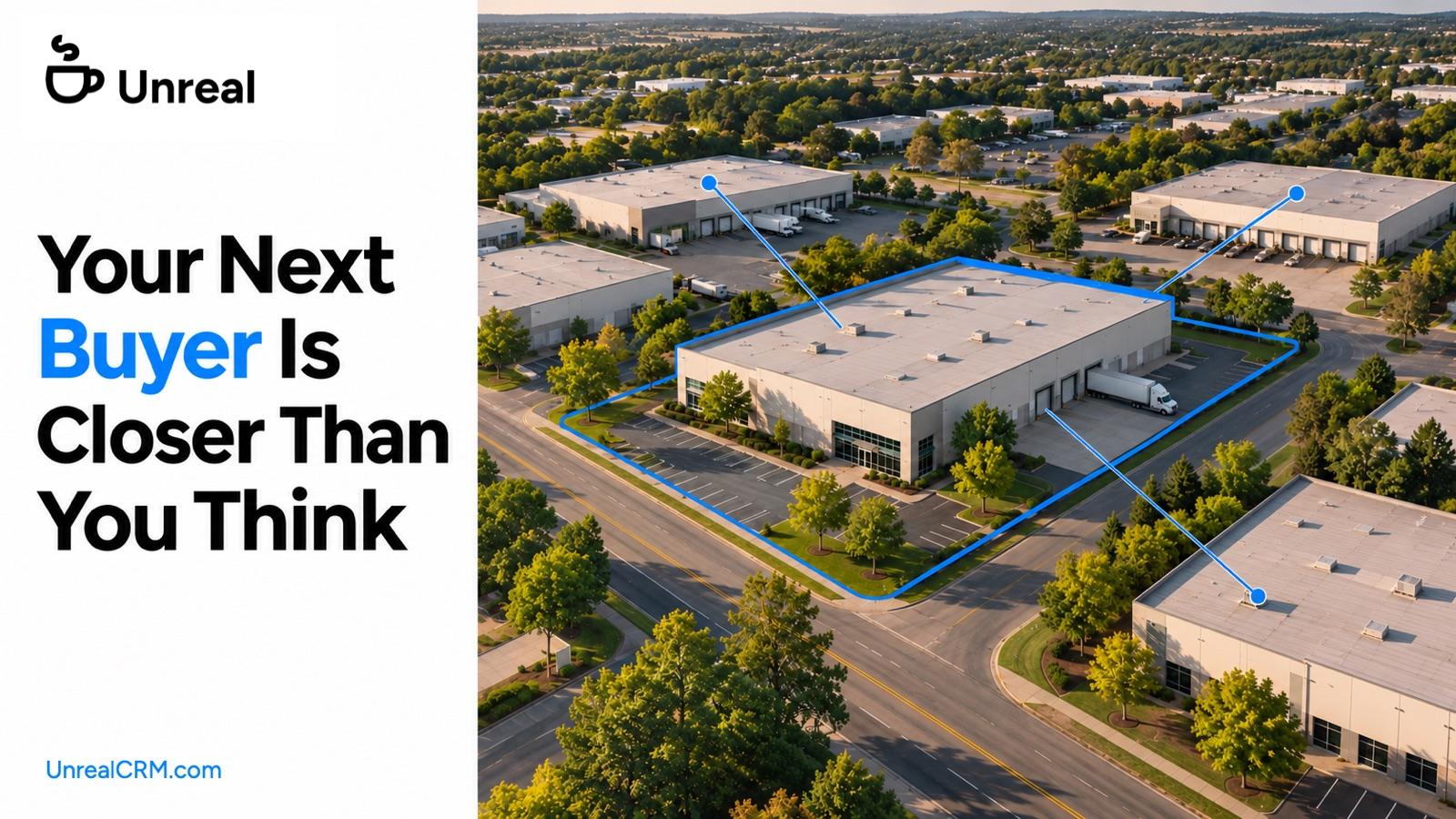
Start with owners of comparable properties, investors who have been buying in the market, and businesses that could use the space. Add the people you already know. That gives you a buyer list built around the assignment, with a reason to contact each person.
You can do this without buying a list or rebuilding your database every time you win a listing.
Let the Property Shape the Search
Take an industrial building occupied by a machine shop. Nearby industrial owners are a sensible starting point, but “industrial” alone is too broad. Building size, lot size, location, layout, and the occupant’s use help narrow the pool.
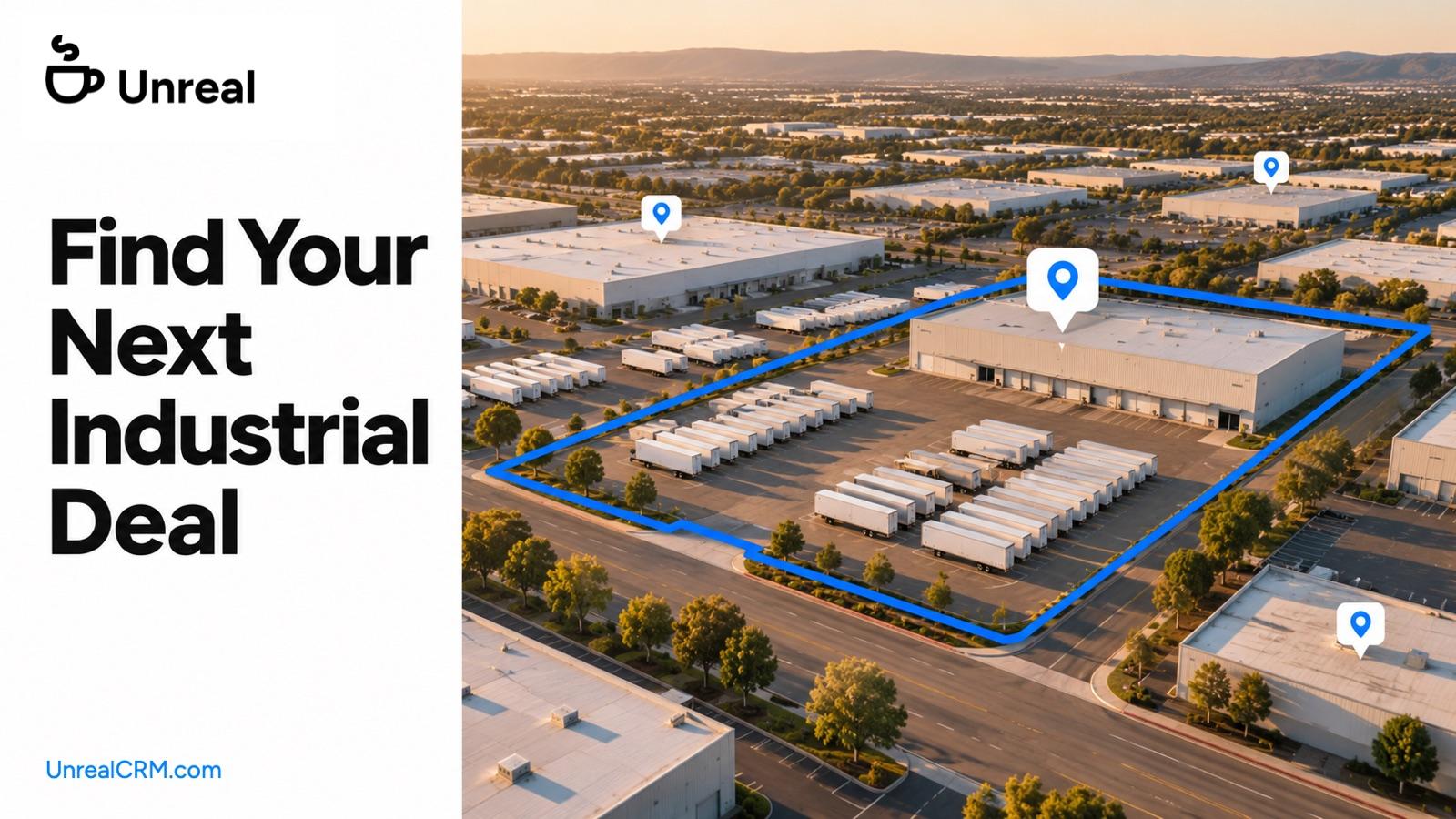
In Unreal, you can search the map by property type and geography, then add the building and occupant characteristics that matter. Start with the requirements that would make or break the deal. You can widen the search once you understand the local pool.
The right radius depends on the assignment. A buyer assembling properties in one business park may care about the next block. An investor focused on a particular industrial use may look across several markets.
Look for Owners Who Already Understand the Asset
Open the portfolios of people who own similar properties. Do they own one building or several? Have they bought recently? Does your listing resemble what they have been acquiring? The same approach powers an industrial owner prospect list.
These details give you a useful opening. “You own three similar buildings in this area” explains why you’re calling far better than a generic announcement that you have a new listing.
Recent purchases don’t tell you whether someone has capital available or wants another property. They tell you what to ask about. Save that distinction in your notes so the rest of the team understands why the person is on the list.
Include the Businesses Using Similar Space
The tenant in the building may want to buy it. Other businesses nearby may be looking for more room or considering ownership.
For the machine shop example, look at similar occupants in the area. A business that needs the same kind of space is worth researching, even if its owner has never appeared on your investor list.
Keep these prospects separate from investors when you prepare outreach. An investor may want to discuss the income and the tenant. A business owner may care first about whether their operation can work in the building. Your reason for calling should reflect the person you’re calling.
Bring Your Existing Relationships Into the Same View
You may already know a buyer who fits. Their last conversation could be buried under a different property or sitting in a colleague’s notes.
Unreal connects your contacts to the properties they own, occupy, or have discussed with you. As you research the market, you can see the people you know alongside newly found owners. The history stays with them.
That matters when an owner has several buildings. You shouldn’t have to rediscover the relationship each time another address appears in your search.
Build a Calling List You Can Actually Work
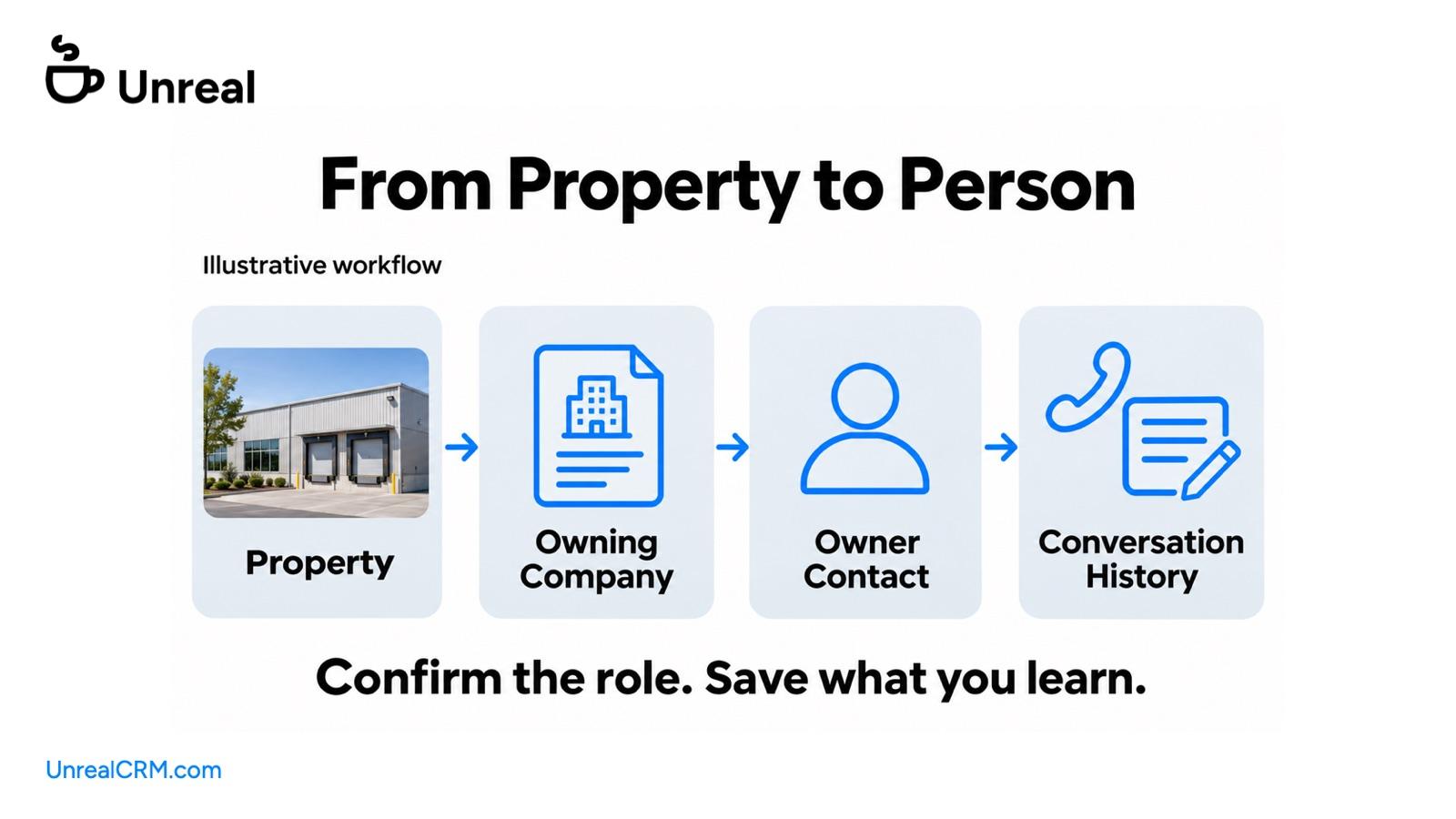
Once the shortlist makes sense, get the owners’ contact information and start outreach from the same platform. Unreal checks across data sources to find phone numbers and emails, then keeps calls, messages, and notes connected to the people and properties involved. When an owner is listed as a company, here is how to find the person behind the LLC.
Before calling, remove repeated numbers and review recent activity. Unreal’s dialer can deduplicate numbers and exclude those called within a period you choose. That helps when the same owner appears through several properties or lists. For more on list hygiene, see how to build a high quality calling list.
After each conversation, record what changed. Perhaps the buyer likes the location but needs a larger building. Perhaps they have paused acquisitions. Perhaps they want the details today.
Those answers improve the next search. Over time, your buyer list becomes a record of real requirements and relationships, with the research and tools to keep it current.
Have a listing you’re working on now? Bring it to an Unreal walkthrough. We’ll help you find the owners and businesses that fit, including the people already in your database.
Keep reading
More on prospecting, owner data and outreach. Or see how Unreal compares to the tool you use today.